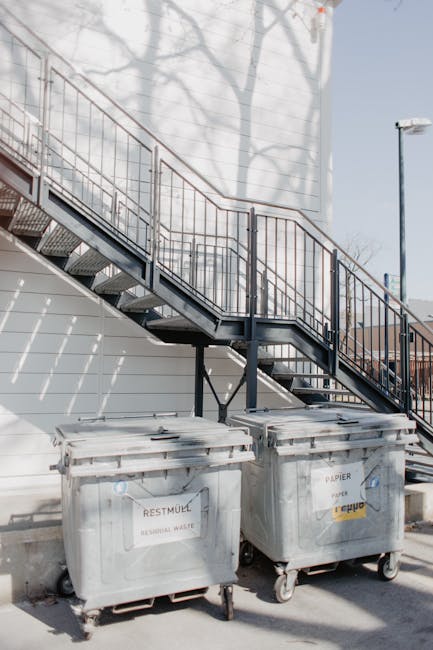
When stair access blocks bulky waste removal in Barking

If you have ever stood at the bottom of a narrow stairwell with a sofa that simply will not turn, you will know the feeling: the job looked straightforward until the staircase got involved. When stair access blocks bulky waste removal in Barking, the issue is rarely just "can it fit?" It is usually about angles, landing space, weight, building rules, and safety. In flats, maisonettes, and older terraces across Barking, a bulky item can become awkward very quickly. This guide explains what to do, what to avoid, and how to choose the most practical route without turning the whole thing into a headache.
There is a simple truth here. The stairs are not being dramatic; they are just being stairs.
In the sections below, you will find a clear process for assessing access, preparing items, comparing removal methods, and understanding when a professional clearance team is the best fit. You will also find a checklist, a comparison table, and a realistic example so you can make a sensible decision rather than a rushed one.
Why stair access issues matter
Blocked stair access affects more than convenience. It changes the entire method of bulky waste removal. A large armchair, wardrobe, mattress, or broken desk may be light enough for two people, but still impossible to manoeuvre safely on a narrow stairwell with a tight turn or low ceiling. In a Barking flat, especially where communal stairs are shared, the challenge can be even bigger because you are also thinking about neighbours, noise, time, and keeping the route clear.
Why does this matter so much? Because one badly judged lift can cause damage to the item, the walls, the bannister, the stairwell, or someone's back. And if the item gets stuck halfway down, nobody enjoys that awkward pause where everyone pretends to be thinking carefully when really they are just trying not to laugh. Better to plan it properly from the start.
There is also the practical side. The more difficult the access, the more likely you are to need extra labour, specialist equipment, or an alternative removal plan. That is not a problem in itself, but it is a problem if you only discover it after the van has arrived and the item will not move. A quick access check saves time, stress, and usually money too.
For people living in upper-floor homes, converted houses, or flats without lift access, this issue comes up often. It also appears with flat clearance, house clearance, and even some furniture clearance jobs where the item itself is not the problem, but the route out is.
How stair access blocks bulky waste removal in Barking works
When stair access is tight, bulky waste removal usually follows one of three paths: the item is carried out carefully, dismantled first, or removed by an alternative route. The right choice depends on the shape of the item, the staircase layout, and how much room is available at landings, doorways, and turns.
The process starts with assessment. A good removal team will want to know whether the stairs are straight or winding, how wide the corridor is, whether there is a lift, and whether the item can be split into parts. A sofa bed, for example, may need to be dismantled before it can leave the property safely. A wardrobe might come apart; a mattress usually cannot. Simple enough, in theory. In practice, one missing hinge or over-tight corner can change the plan.
In Barking, access problems often show up in:
- upper-floor flats with narrow communal stairwells
- converted houses with awkward turns
- properties with no lift or only a small lift
- shared hallways where bulky items must not block escape routes
- older buildings with steep stairs or tight corners
Once the access route is understood, the team can decide whether to use protective wraps, lifting straps, trolleys, or controlled manual carrying. Some jobs are suited to a quick stair carry. Others are better handled as part of a broader waste removal plan that includes dismantling, sorting, and loading in stages.
The key thing to remember is this: "bulky waste" is not the same as "difficult waste." The item might be legal and easy to dispose of, but still awkward to remove. That is where access planning earns its keep.
Key benefits of planning ahead
Planning for blocked stair access is not just about avoiding frustration. It makes the whole clearance safer, tidier, and often faster. You know what you are dealing with before anyone starts lifting, which is a small thing that makes a big difference.
- Less risk of damage: walls, paintwork, bannisters, carpets, and furniture are less likely to get scuffed or bumped.
- Safer lifting: a planned route reduces strain, slips, and rushed movements on stairs.
- Faster completion: crews waste less time guessing or reworking the route.
- Clearer pricing: access issues can be priced more accurately when known in advance.
- Better neighbour relations: less disruption in shared spaces is always a win.
There is another benefit people often overlook: confidence. If you already know the item may be too large for the stairs, you can stop hoping for a miracle and start planning a sensible solution. That sounds blunt, but it saves a lot of bother.
For mixed jobs that involve old furniture, broken appliances, and general household clutter, services such as home clearance or garage clearance can be much easier to coordinate than trying to shift one item at a time yourself.
Who this is for and when it makes sense
This kind of planning matters for a fairly wide range of people. If you live in a Barking flat and you have ever looked at a wardrobe with a resigned sigh, you already know who you are. But the need is not limited to households. Landlords, letting agents, tenants moving out, office managers, small business owners, and tradespeople all run into access problems at some point.
It makes sense to plan carefully when:
- the item is bulky but still reusable, and you want it removed without damage
- the staircase is narrow, steep, or awkwardly turned
- you share the route with other residents
- there is a move-out deadline or end-of-tenancy handover
- the item is heavy enough that carrying it unsafely would be a bad idea
It also makes sense if you are already arranging another service. For example, someone clearing out a spare room might combine furniture removal with a larger loft clearance or office clearance. One of the quiet advantages here is that the team can sequence the job properly rather than forcing everything through one narrow stairwell at the same time.
To be fair, a lot of people only discover the access issue on the day. That is usually when the measuring tape comes out and everyone goes a bit silent. Better late than never, but ideally not last-minute.
Step-by-step guidance
If you are dealing with bulky waste and the stairs are the problem, work through the job methodically. It does not need to be complicated. It just needs to be honest.
- Measure the item. Check the width, height, depth, and any awkward points such as armrests, handles, or fixed legs.
- Measure the route. Note stair width, landing space, door openings, corner turns, and any low ceilings or radiators that reduce room.
- Check whether the item can be dismantled. Flat-pack furniture, bed frames, tables, and some wardrobes can often be broken down into smaller parts.
- Decide whether the stairs are realistic. If the turn is too tight, do not force it. That is how scratches happen.
- Clear the route. Move shoes, plants, recycling, loose mats, and anything else that could become a trip hazard.
- Protect surfaces. Use blankets, corner protection, or cardboard where appropriate.
- Choose the safest removal method. Carry, dismantle, or remove via another route if available.
- Schedule the collection. Make sure the removal team knows about access restrictions before they arrive.
If the item is part of a larger clearance, mention that too. A single difficult item can change the order of the whole job. The cleaner the briefing, the smoother the day.
Many people also find it helpful to review a service's safety and handling approach before booking. Pages such as health and safety policy and insurance and safety give a useful sense of how carefully a provider works.
Expert tips for better results
There are a few small habits that make blocked-stair removals much easier. None of them are glamorous, but that is often the point.
Start with the staircase, not the item
People naturally focus on the bulky item. But the staircase decides the outcome. A chair that looks awkward might be easy; a slim sofa with one fixed arm may be a nightmare. The route matters more than the label.
Think in terms of turning space
A narrow straight stair can sometimes be easier than a wide but twisty one. It is the turns that create trouble. If you cannot swing the item around a landing, you may need to dismantle it or rethink the removal altogether.
Keep one person in charge
On the day, one person should make the call. Too many voices on a stairwell leads to confusion, and confusion is bad when someone is holding a heavy item. A simple "left, pause, lower" style of instruction works better than a chorus of ideas.
Use the right service for the type of waste
Do not treat every clearance as the same. Household furniture, builders' debris, garden waste, and office items all behave differently. If you are clearing renovation leftovers as well as furniture, a dedicated builders waste clearance option may fit better than a generic collection.
Be realistic about DIY
Some things are fine to move yourself with a friend and a decent plan. But if you are trying to drag a heavy wardrobe down a communal staircase in socks, that is not "saving money", that is just a future apology. Use judgement.
Common mistakes to avoid
Most problems with stair-blocked bulky waste removal come from a handful of avoidable mistakes. The good news is that they are easy to spot once you know what to look for.
- Not measuring properly: guessing is the fastest route to a stuck item.
- Forcing a bad angle: if it needs brute force, the route is probably wrong.
- Forgetting about landings: an item may fit on the stairs but fail at the turn.
- Ignoring shared access: blocking common areas can annoy neighbours and create safety issues.
- Assuming everything can be taken whole: some items really do need dismantling first.
- Booking without explaining access restrictions: the team can only plan for what they know.
Another common mistake is leaving sorting until the last minute. If you have mixed items, separate what is going, what is being kept, and what needs special handling. It sounds obvious, yet somehow it gets missed all the time.
If your job includes a pile of old chairs, tables, or cabinets, it may be worth looking at furniture disposal alongside the clearance itself. That way the awkward bits are considered before the stairs become the main event.
Tools, resources and recommendations
You do not need a van full of specialist gear to handle every access problem, but a few practical tools make a difference. The idea is to reduce strain and protect the building.
- Measuring tape: useful for checking doorways, landings, and item dimensions.
- Work gloves: help with grip and reduce minor scrapes.
- Moving straps: can improve control for trained handlers.
- Furniture blankets: useful for wrapping corners and protecting finishes.
- Cardboard or corner guards: a simple way to shield walls and bannisters.
- Tidy route plan: not a physical tool, but honestly one of the best.
If you are comparing service providers, look at more than price. Check how clearly they explain access issues, how they handle scheduling, and whether they are transparent about payment. It is sensible to read the pricing and quotes information before making a decision, and to understand the provider's payment and security approach.
For residents in flats and shared buildings, it can also help to review any accessibility information the company provides. That is where a page like accessibility statement may give you a feel for how they think about routes, assistance, and practical access needs.
Law, compliance, standards and best practice
When bulky waste removal involves stairs, compliance is mainly about safety, care, and responsible waste handling. You do not need to become a legal expert, but you should know the basics.
First, waste must be handled and disposed of responsibly. That means a remover should not just take items away and hope for the best. Reuse, recycling, and proper disposal are all part of the picture. If sustainability matters to you, a page like recycling and sustainability is worth reviewing because it shows how the company approaches the aftercare of collected items.
Second, shared areas need respect. In communal properties, stairwells and corridors often have to remain usable as escape routes. That means keeping the path clear, avoiding prolonged obstruction, and moving carefully. It sounds simple because, well, it should be.
Third, public liability and handling risk matter. A professional team should work in a way that reduces damage and injury risk. That is one reason insurance and safe working practices are more than just marketing phrases. They matter when an awkward item is halfway through a stairwell and everyone is trying not to scratch the wall.
Finally, if you are a business arranging clearances in a premises with stair access restrictions, your obligations can be broader. Keeping staff and visitors safe, protecting common areas, and arranging removal at the right time all matter. For recurring commercial needs, business waste removal may be more suitable than a one-off domestic collection.
Options and comparison table
There is usually more than one way to solve the problem. The best option depends on the item, the stairs, and the time you have.
| Option | Best for | Pros | Limits |
|---|---|---|---|
| Manual stair carry | Items that fit comfortably and can be handled safely | Quick, direct, often simplest | Risky if the item is heavy or the staircase is tight |
| Dismantling first | Wardrobes, bed frames, tables, some sofas | Makes awkward items manageable | Needs tools, time, and care with fixings |
| Alternative route | Properties with rear access, ground-floor exits, or lifts | Can reduce stair damage and lifting strain | Not always available |
| Full clearance service | Mixed loads or larger household clearances | Handles planning, labour, and disposal in one go | May be more than you need for a single small item |
In many Barking properties, a full clearance approach is the least stressful option when access is difficult. That is especially true if the job includes more than one type of waste, or if the item being removed is only one part of a bigger clear-out.
Case study
A small top-floor flat in Barking had a large wardrobe that had been assembled in the bedroom years earlier. The occupant assumed it would come out the same way it went in. Fair enough assumption, but not quite right. The stairwell had a tight turn halfway down and a narrow landing, which made the wardrobe impossible to rotate safely in one piece.
The solution was simple once the access was checked properly. The wardrobe was emptied, partly dismantled, and taken down in sections with the route protected by blankets. The stairwell stayed clean, the walls stayed unmarked, and the job was finished without drama. Nothing flashy. Just good preparation.
What made the difference was not strength. It was not speed either. It was the decision to assess before lifting.
This is the pattern you see again and again in real clearance work. A problem that looks physical is often really a planning issue. When you slow it down at the start, the rest becomes much easier.
Practical checklist
Use this quick checklist before arranging removal where stair access may be a problem:
- Measure the item in full, including any fixed parts.
- Measure stair width, landing space, and any tight turns.
- Check whether doors must be removed or furniture dismantled.
- Clear the route of shoes, mats, boxes, and loose objects.
- Protect walls, bannisters, and flooring where needed.
- Confirm whether shared access needs special care or timing.
- Tell the removal team about every access issue in advance.
- Group all unwanted items together before collection day.
- Separate anything that needs special handling.
- Choose the safest method, not the bravest one.
If you can tick off those points, you are already ahead of most last-minute clearances. Not perfect, just properly prepared.
Conclusion
When stair access blocks bulky waste removal in Barking, the right answer is usually not to push harder. It is to plan smarter. Measure the route, understand the item, and choose the method that protects both people and property. That approach saves time, reduces damage, and makes the whole thing feel much less stressful.
For one-off furniture, mixed household items, or larger clearances, it is often worth using a service that can handle the access challenge as part of the job rather than making you solve it alone. And if you want to understand the company behind the service, you can learn more through the about us page.
Get a free quote today and see how much you can save.
Sometimes the best clearance is the one that starts with a calm look at the stairs and ends with an empty room, a clear route, and a quiet sense of relief.
Frequently Asked Questions
What should I do if my bulky item will not fit down the stairs?
Stop forcing it and reassess the route. Measure the item and the staircase, then consider dismantling the item or booking a professional clearance team that can plan around the access issue safely.
Can a removal team take furniture apart on site?
Often, yes, if the item is suitable for dismantling and the team is equipped to do it. It depends on the type of furniture, the fixings, and how much room there is to work safely.
Is stair access a problem for all bulky waste?
Not always. Some items are surprisingly manageable, while others are too awkward even if they are not especially heavy. The shape of the item and the turning space matter as much as the weight.
Do I need to tell the clearance company about stair access before booking?
Yes, absolutely. The more they know in advance, the better they can plan the labour, timing, and equipment. It also helps avoid delays and unexpected issues on the day.
What types of items are most likely to get stuck on stairs?
Large wardrobes, sofa beds, mattresses with rigid frames, heavy cabinets, and oversized desks are common troublemakers. Anything with fixed corners or awkward depth can become difficult very quickly.
Can bulky waste be removed through another route instead of the stairs?
Sometimes. If there is rear access, a ground-floor exit, or a lift that can safely take the item, that route may be better. A good team will judge the safest option rather than forcing the obvious one.
Will stair access problems make the job more expensive?
They can, because access issues may require extra time, more labour, or dismantling work. The exact cost depends on the job, so a clear description of the route helps produce a more accurate quote.
How do I protect my walls and bannister during removal?
Use blankets, cardboard, or corner protection where appropriate, and keep the route clear. Slow, controlled movement matters far more than rushing. A little prep goes a long way.
What if I live in a flat with shared stairs?
Then it is especially important to keep communal areas clear and minimise disruption. Plan the collection time carefully, avoid blocking exits, and make sure the route is safe for other residents.
Is it better to book a full clearance or a single-item collection?
If you only have one item and access is straightforward, a single-item collection may be enough. If the property has several bulky items or tricky stairs, a broader clearance is often easier and more efficient.
What if the item is too big to move and too valuable to damage?
That is a strong sign to use a careful, planned approach rather than a rushed one. Measure everything, consider dismantling, and choose a provider that understands handling and protection as well as disposal.
Can I get help with other types of clearance at the same time?
Yes. If you have mixed items, it can make sense to combine furniture, household clutter, loft contents, or even garage and office waste into one organised clearance. That often keeps the job simpler overall.